
Ecommerce websites, Leeds
Online shops built to sell, not just to look nice.


Sam and RobDialekt, Leeds
We're Sam and Rob, a small Leeds studio. We design and build Shopify and WooCommerce shops, and we've done the other side too: the brand, the catalogue and the operations behind a lighting shop that went from no orders at all to 13,000 buyers.
Sound familiar?
What the shop saysBrowse our full range.
What's actually happeningThree menus deep, people give up looking.
What the shop saysFree delivery over £50.
What's actually happeningThey find out the delivery cost at the very end, and leave.
What the shop saysAny questions, give us a call.
What's actually happeningThe phone sells more than the website does.
Plenty of visitors. Not enough orders.
Most shops we look at don't have a traffic problem as much as a shop problem. People arrive, poke around, can't find the thing (or find it and can't tell if it's the right one), and leave. Or they get all the way to the checkout and bail at the delivery costs.
The products are fine. The shop is getting in the way.
So we build it the other way round. Start with how your customers actually buy, plan the categories, product pages and checkout around that, then get the unglamorous stuff behind it (stock, couriers, payments, accounts) set up so it runs without you babysitting it.
What you get
Shopify or WooCommerce
Shopify if you want it simple and hosted, WooCommerce if it needs to bend a bit more. We'll tell you which one fits the shop, not which one we fancy building.
- Shopify
- WooCommerce
- Shop migrations
Categories people can find their way around
The catalogue planned so it still makes sense at fifty products or five thousand, with filters and search that actually help.
- Catalogue planning
- Filters and search
- Navigation
Product pages that answer the question
Photos, specs, delivery and returns where people look for them, so the page does the job a good shop assistant would.
- Product pages
- Photography direction
- Product copy
A checkout that doesn't lose people
Fewer steps, no nasty surprises at the end, and the payment options people expect to see.
- Checkout
- Payments
- Delivery rules
The bit behind the shop
Couriers, accounts software, stock and web chat connected up, and training so your team can run it themselves rather than ringing us every time.
- Integrations
- Accounts
- Training
The honest bit.
A new shop won't fix a product nobody wants, or prices that don't stack up. If that's the real problem we'll say so, before you spend anything on a website.
What a better shop does do is stop you losing the people who were already halfway to buying. That's usually where the money is.
How it works
- 1
Talk
A short call. You tell us what you do and what the website isn't doing. We tell you straight whether we're the right people for it.
- 2
Dig
Paid discovery, where we get properly under the skin of the business, the customers and the competition. The fee comes off the project if you go ahead.
- 3
Map and Build
We plan the pages, write and design them, and build the site. You see it come together and sign off each stage.
- 4
Grow
Launch isn't the finish line. We watch how people actually use the site and keep improving it.
Done it properly
Also worth a look
- WebsitesThe full service, and everything under it.
- Web design in LeedsWebsites for businesses that are better than their website.
- Website migrationLeaving Yell, Wix or a locked contract without losing your rankings.
- Websites for buildersBetter enquiries from the right clients, in the right areas.
- Website redesignRebuild it or fix it, and keep what Google already likes.
- Landing pagesPages for ads and campaigns that don't waste the clicks.
Get it selling.
Want your shop doing more of the selling?
Send us a link to the shop (or tell us about the one you want to start). We'll have a proper look and tell you what we'd change first.
Website projects start at £1,500. Shops usually sit higher than that, because of the product setup, payments and integrations, so you'll get a proper quote once we understand what you sell and how.
Shopify is simpler to run and everything's hosted for you. WooCommerce sits on WordPress and gives you more control over how things work. We'll recommend one based on the shop, not a preference.
Yes. Products, customers and orders can usually come across, and we redirect the old web addresses so the pages that rank keep their place. There's more on how we do that on the website migration page.
Either of us. We can load the catalogue for you, or set it up and train your team to do it. Most people end up doing a bit of both.
The technical side is part of every build: page titles, speed, redirects, structured data and Search Console. Ongoing SEO and content is a separate piece of work if you want it.
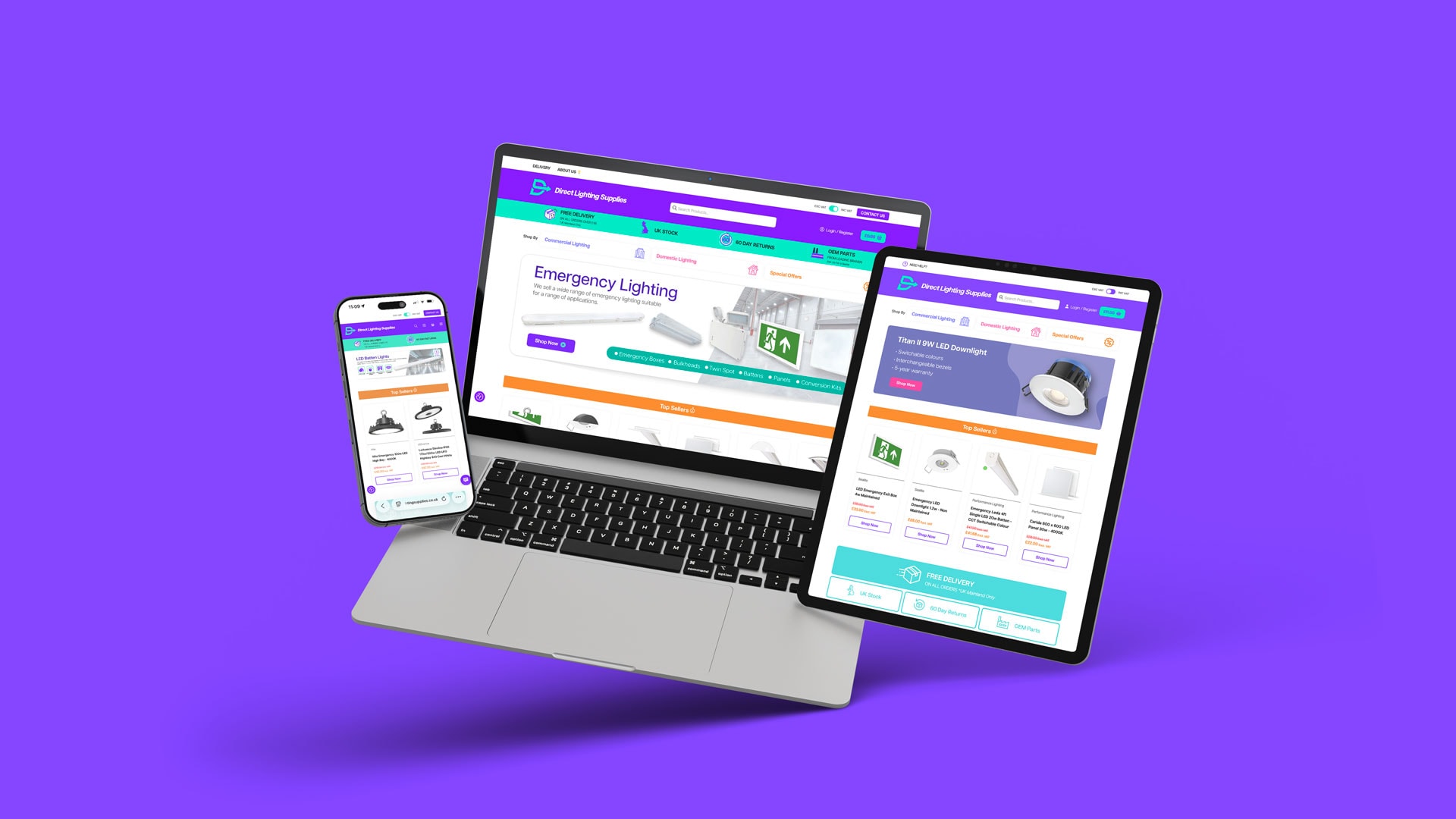
Direct Lighting Supplies is the one to look at. The brand, the shop and the operations behind it, from no orders at launch to over £500k in its second year. The full story is in the case study.